Math Anxiety
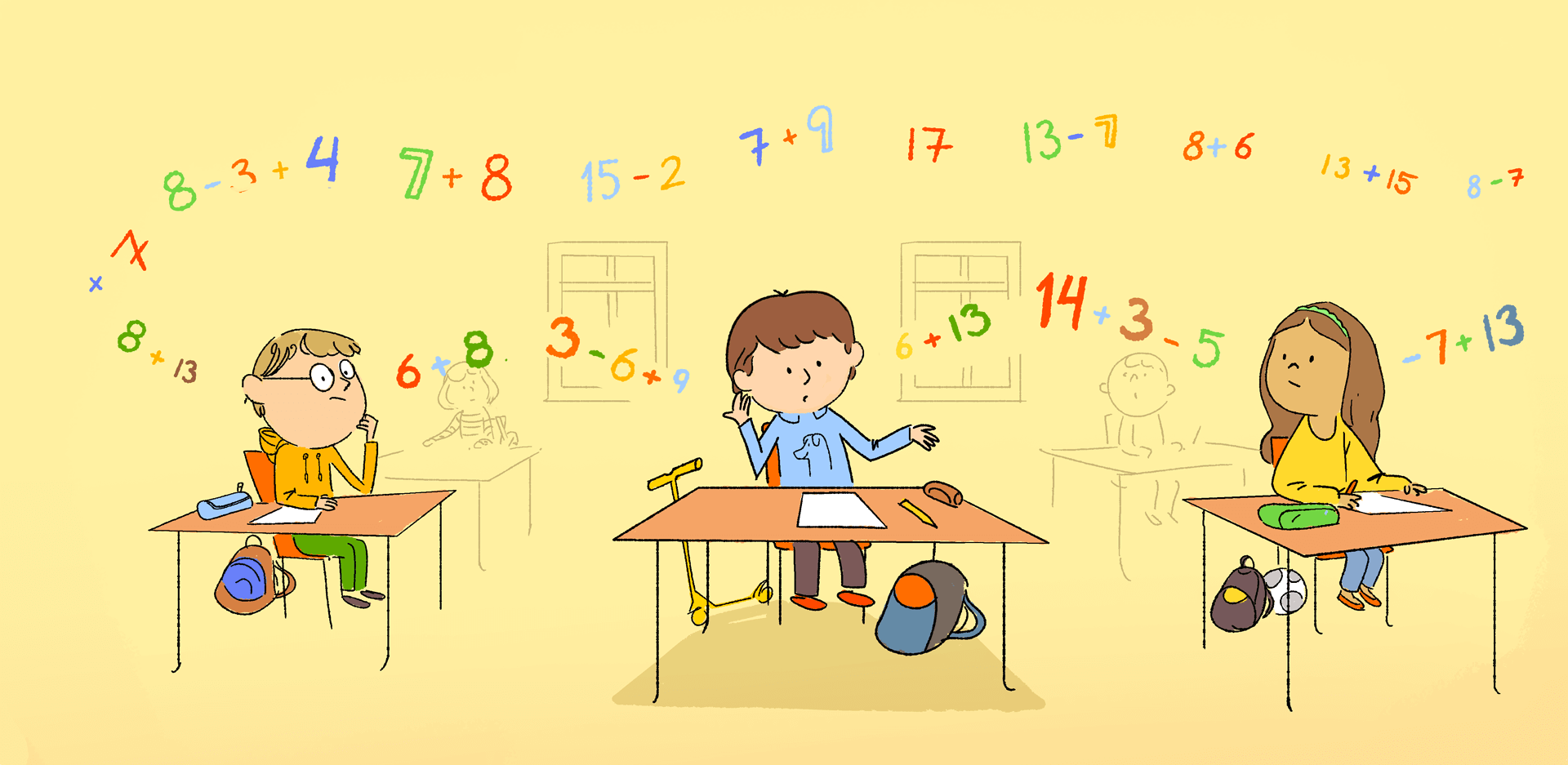
At UC Irvine, I worked on two different research projects on math anxiety of K-12 and college students. Both projects explored the cognitive mechanisms of math anxiety, and its intricate relationship with mind wandering.
Gender Differences in the Impact of Worked Examples on Math Anxiety
PI: Fernando Rodriguez Ph.D.
Math anxiety, a worry about a mathematical situation, disrupts students’ mathematical performances by limiting their cognitive resources. Factors of math anxiety include their personal experiences with learning math and confidence. Furthermore, limited cognitive resources due to high anxiety are related to greater mind wandering, but the specific relationship between math anxiety and mind wandering is yet unexplored. This study examined this relationship and the effects of mathematical attitudes and backgrounds on math anxiety. Statistical analyses indicate a significant relationship between students’ math anxiety and mind wandering with math self-efficacy and proficiency notably influencing this dynamic. Meanwhile, math anxiety was significantly predicted by math self-efficacy and math proficiency. Improving students’ mathematical achievements requires interventions focusing on enhancing their attention while increasing their confidence in math and providing support for managing math anxiety.
Gender Differences in the Impact of Worked Examples on Math Anxiety
PI: Lindsey Richland Ph.D., June Ahn Ph.D., Fernando Rodriguez Ph.D.
Cognitive Load Theory (Sweller, 1988) suggests that worked examples, mathematical problems with written out solutions, can increase students’ available working memory resources - which are a limited set of cognitive attention resources that allow students to learn mathematics concepts and solve word problems. At the same time, many students feel math anxiety when faced with math learning and problem solving, which can generate worries that engage the same limited set of working memory resources, reducing available resources for new learning and problem solving. Furthermore, gender gaps in math achievement continue to be a persistent issue, potentially being caused by the aggravated impact of math anxiety on girls. To test whether worked examples are able to equally reduce math anxiety on math performance for all students, a pre-post design experiment was conducted on 280 fifth-graders from ten schools in Orange County and Chicago to see whether worked examples could reduce mathematical anxiety in students learning ratios. A multiple linear regression model and path analysis models were used to assess the gender differences in the effects of worked examples. Findings indicate that for those who were given worked examples during instruction, regardless of their genders, their mathematical anxiety was mitigated which allowed them to perform more accurately in the delayed assessment. However, gender differences in the impact of math anxiety on problem-solving skills were still significant.
Career Pathways for Learning & Education, Analytics and Data Science (CP-LEADS)
CP-LEADS Fellows Program is a data science fellowship and research training program at University of California, Irvine.
This research project is funded by the Institute of Education Sciences.